Silent Upgrades, Stolen Intimacy: How Apps Quietly Expanded Their Reach Into Your Private Life
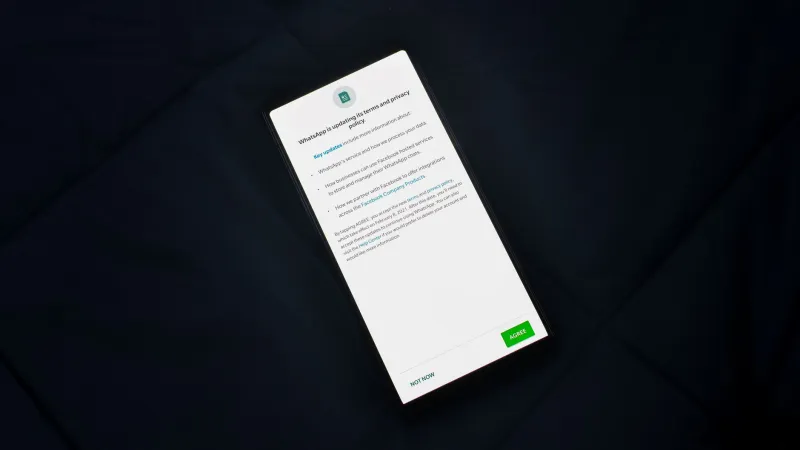
When Americans download a new application, they tend to make a simple mental bargain: the app does what it promises, and in exchange, it receives only the access it genuinely needs to function. That bargain, it turns out, has a shelf life — and for millions of users, it expired quietly, buried inside routine software updates they never scrutinized.
The phenomenon has a name in security research circles: permission creep. It describes the gradual, incremental expansion of the data access an application claims over months or years of updates, often in ways that bear no logical relationship to the app's stated purpose. The result is a landscape in which software that once performed a narrow, benign function now sits deep inside the most sensitive corners of a user's digital life.
How Permission Creep Actually Works
On both Android and iOS, applications request access to device resources — the camera, microphone, location services, contacts, calendar, health data, and photo library — through a system of declared permissions. In theory, users grant these permissions consciously. In practice, the architecture of software updates has created significant gaps in that consent model.
On Android in particular, applications installed before the platform's permission-model overhaul in Android 6.0 (Marshmallow, released in 2015) inherited blanket approvals for any permissions declared in their original installation files. As those apps updated over subsequent years and added new permission requests to their code, many users were never prompted to review or approve the expanded access. The permissions simply accumulated.
Even on more modern operating systems, the problem persists in subtler forms. Developers routinely bundle new permission requests into updates alongside feature additions, presenting them as a package deal. Users who tap "Update All" in their app store — a behavior actively encouraged by both Apple and Google as a security best practice for patch management — may inadvertently ratify a substantially expanded data-sharing arrangement without ever reading the fine print.
"The update flow is not designed for informed consent," one mobile security researcher noted in a widely cited conference presentation. "It is designed for frictionless adoption."
The Apps Most Likely to Have Outgrown Their Mandate
The pattern is not confined to any single category of software. Researchers and investigative journalists have documented permission creep across a broad spectrum of consumer applications.
Weather apps have long been among the most scrutinized offenders. Several major weather services, including some that ranked among the most downloaded free apps in the United States for years, were found to be monetizing precise GPS location data collected far beyond what accurate forecasting requires. Some transmitted that data to dozens of third-party advertising and analytics partners.
Retail and loyalty apps present a similar profile. Applications that began as simple digital coupon wallets have, through successive updates, expanded to request Bluetooth access (enabling in-store tracking), microphone access (ostensibly for voice search), and continuous background location. The functional justification for each individual request may appear plausible in isolation; the cumulative picture is considerably more invasive.
Free utility apps — flashlights, QR code scanners, PDF converters, and similar single-purpose tools — have a particularly documented history of requesting permissions that serve advertising and data-brokerage functions rather than the utility itself. The Federal Trade Commission has taken enforcement action against operators in this space, though the practice remains widespread.
Social and messaging apps occupy a different tier of concern. Platforms with large user bases have, over time, requested access to contacts (to suggest connections), photo libraries (for sharing features), and health data APIs. The breadth of access, combined with the scale of the user population, makes these applications among the most consequential holders of intimate personal information in the American market.
What These Permissions Actually Unlock
It is worth being precise about what each category of permission makes available, because the labels in a permissions dialog are often euphemistic.
- Contacts access does not merely reveal names and phone numbers. Modern contact entries frequently contain email addresses, home addresses, birthdays, employer information, and notes fields that users populate with sensitive details. An app with contacts access can reconstruct a meaningful social graph of a user's relationships.
- Precise location (as distinct from approximate location) enables the construction of behavioral profiles: where a person sleeps, worships, receives medical care, and spends recreational time. Aggregated over months, this data is commercially valuable and personally revelatory.
- Photo library access on a modern smartphone encompasses years of images that may contain faces, documents, prescription labels, financial statements captured for record-keeping, and metadata encoding where and when every image was taken.
- Health data permissions, available through Apple's HealthKit and Google's Health Connect frameworks, can expose menstrual cycle records, sleep patterns, heart rate histories, and medication logs.
Granting any of these permissions to an application that lacks a legitimate operational need for the data is not a theoretical risk. It is a direct transfer of sensitive personal information to a third party whose data-handling practices, retention policies, and business relationships the average user cannot meaningfully audit.
Auditing and Revoking Permissions: A Practical Framework
The good news is that both major mobile platforms have invested meaningfully in permission-management tools over the past several years. The less encouraging reality is that these tools are underused, largely because most users do not know they exist or how to navigate them.
On iPhone and iPad (iOS/iPadOS): Navigate to Settings, then Privacy & Security. Each permission category — Location Services, Contacts, Photos, Microphone, Camera, and so on — presents a complete list of every application that has requested that access, along with its current permission status. Review each list. Ask yourself whether the app's core function plausibly requires the access it holds. If it does not, revoke it.
iOS also offers a "Selected Photos" option under Photos access, allowing users to grant an app visibility into a curated subset of their library rather than the entire archive. This represents a meaningful middle ground for apps where some photo access is legitimate.
On Android: The path varies slightly by manufacturer, but on stock Android, navigate to Settings, then Privacy, then Permission Manager. The interface is organized by permission type, mirroring the iOS approach. Android 12 and later versions introduced approximate location as a distinct option from precise location — a distinction worth exercising wherever possible.
Both platforms now offer the ability to grant location access only while an app is actively in use, rather than continuously in the background. For the vast majority of applications, "While Using" is the appropriate setting. Continuous background location access should be reserved for navigation tools and similar services where the functional case is unambiguous.
Establish a review cadence. Security professionals recommend auditing application permissions at least twice per year — a practice that takes less than fifteen minutes and surfaces accumulations of access that would otherwise go unnoticed. Treating this review as a routine maintenance task, similar to checking for software updates, builds a meaningful defensive habit.
Delete what you no longer use. An application that is not installed cannot request permissions. The most effective mitigation for permission creep is removing apps that have outlived their usefulness entirely. Most Americans carry dozens of applications they have not opened in over a year. Each one represents an unnecessary surface area.
The Regulatory Horizon
Legislative attention to app permissions and data minimization is growing, though it remains fragmented at the federal level. Several states, including California under the California Consumer Privacy Act and its subsequent amendments, have introduced requirements that touch on data collection practices. The FTC has signaled increased scrutiny of mobile data practices under its unfair and deceptive acts authority.
For now, however, the most reliable protection is individual vigilance. The permission audit is one of the few privacy interventions that costs nothing, requires no technical expertise, and delivers immediate, measurable results.
The apps on your phone know a great deal about you. The question worth asking — today, not eventually — is whether they have earned that knowledge, or simply accumulated it while your attention was elsewhere.